
Meat Extract Market Size and Share
Market Overview
| Study Period | 2021 - 2031 |
|---|---|
| Market Size (2026) | USD 5.14 Billion |
| Market Size (2031) | USD 7.72 Billion |
| Growth Rate (2026 - 2031) | 8.49 % |
| Fastest Growing Market | Middle East and Africa |
| Largest Market | Asia-Pacific |
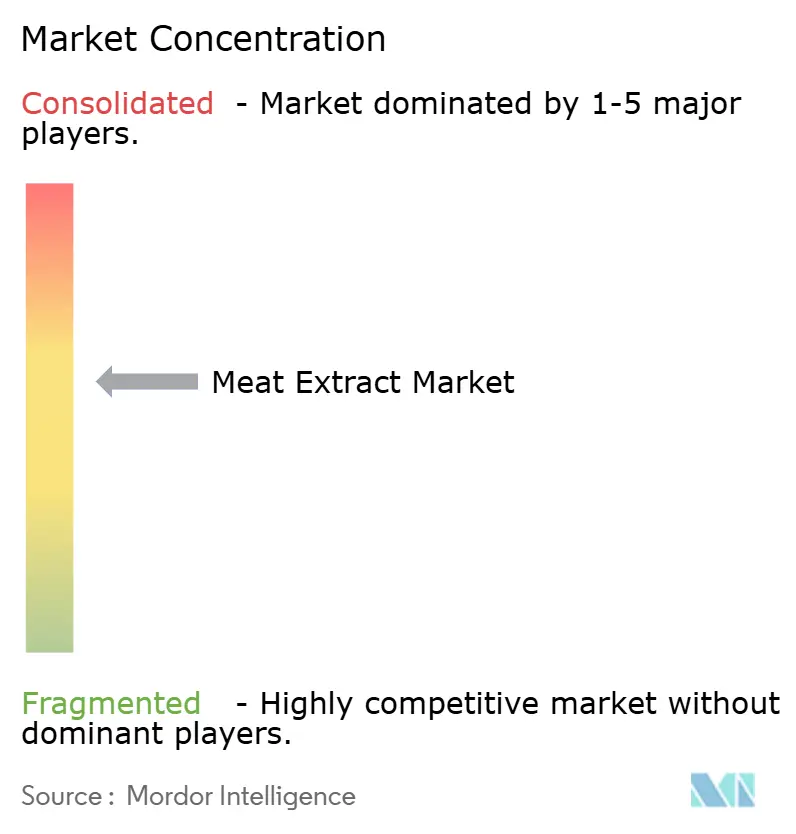
| Market Concentration | Medium |
Major Players *Disclaimer: Major Players sorted in no particular order Image ? 黑料不打烊. Reuse requires attribution under CC BY 4.0. | |
Meat Extract Market Analysis by 黑料不打烊
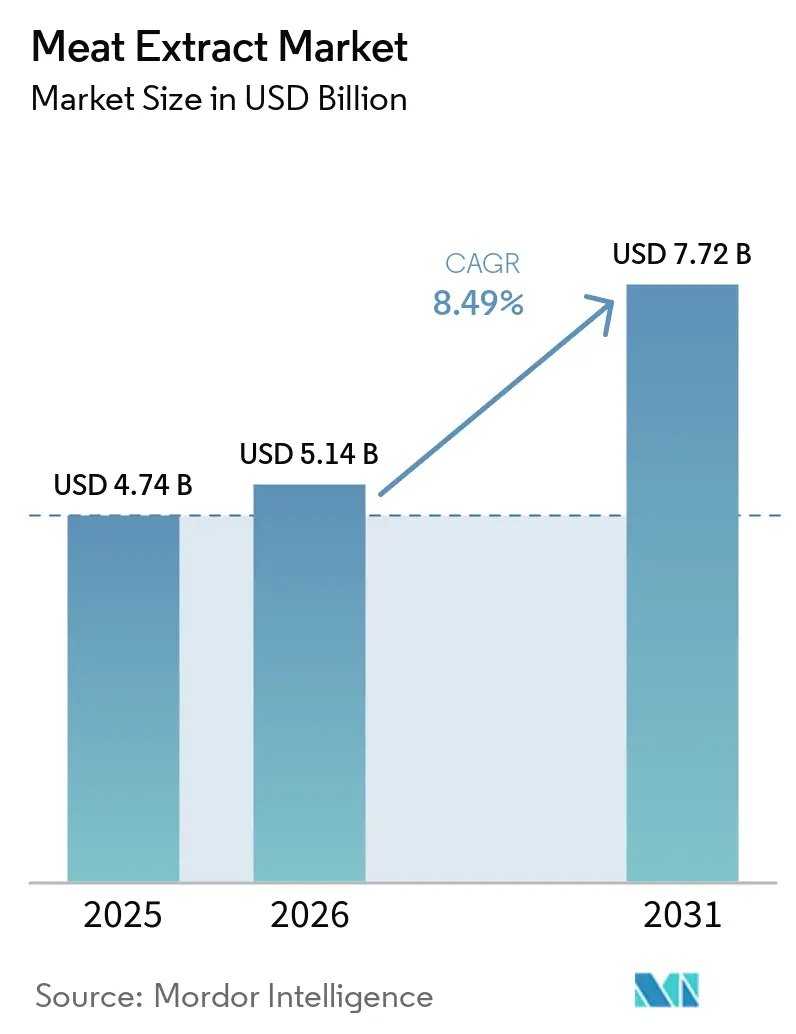
The meat extract market size reached USD 4.74 billion in 2025 and is projected to achieve USD 5.14 billion by 2026 and USD 7.72 billion by 2031, reflecting an 8.49% CAGR through the forecast period. The meat extract market is supported by demand for protein-rich foods, convenient meal formats, and savory flavor systems used in packaged foods, foodservice, and health nutrition applications. Beef, pork, chicken, fish, and turkey extracts can serve as direct inputs where product developers need animal-derived flavor and concentrated protein characteristics. The meat extract market also benefits when large food manufacturers standardize ingredient requirements across soups, sauces, seasonings, ready meals, snack products, and nutrition products. Competition increasingly depends on documented sourcing, food safety systems, species traceability, and formats that meet the operating needs of industrial customers and commercial kitchens.
Key Report Takeaways
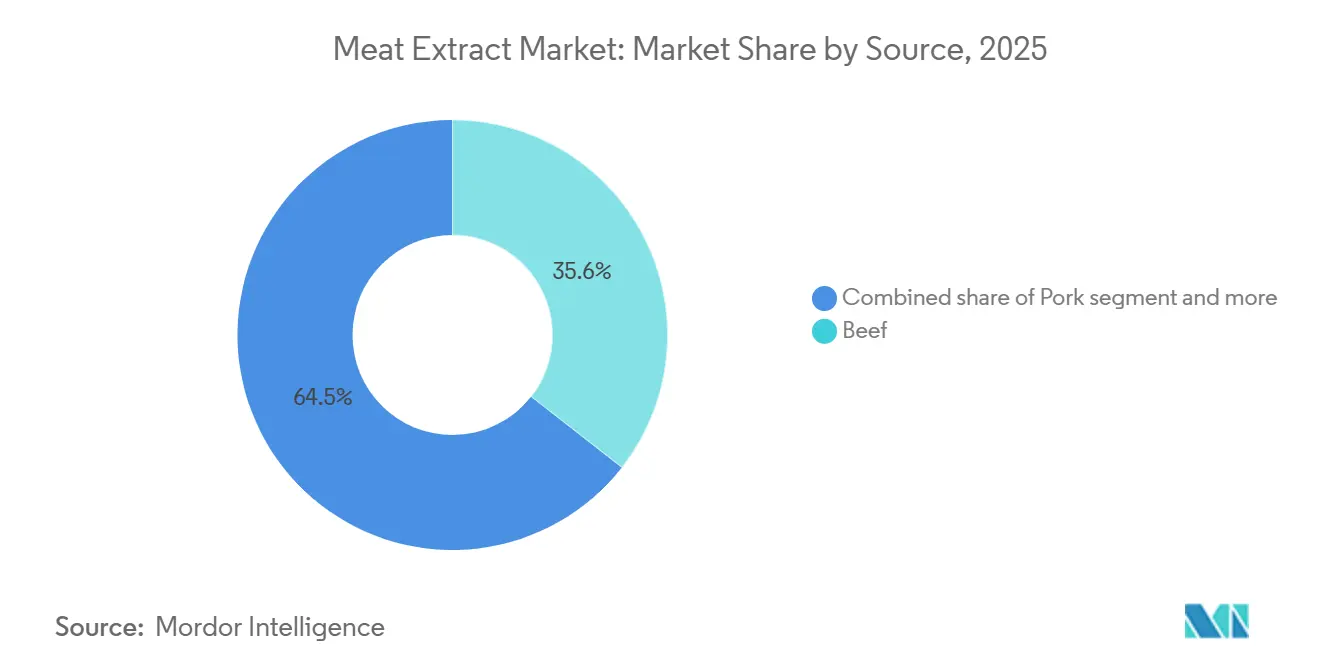
- By source, beef held 35.55% of the meat extract market share in 2025, while fish is forecast to grow at a 9.01% CAGR through 2031.
- By form, powder held 46.09% of the meat extract market share in 2025, while liquid concentrate is forecast to grow at a 9.23% CAGR through 2031.
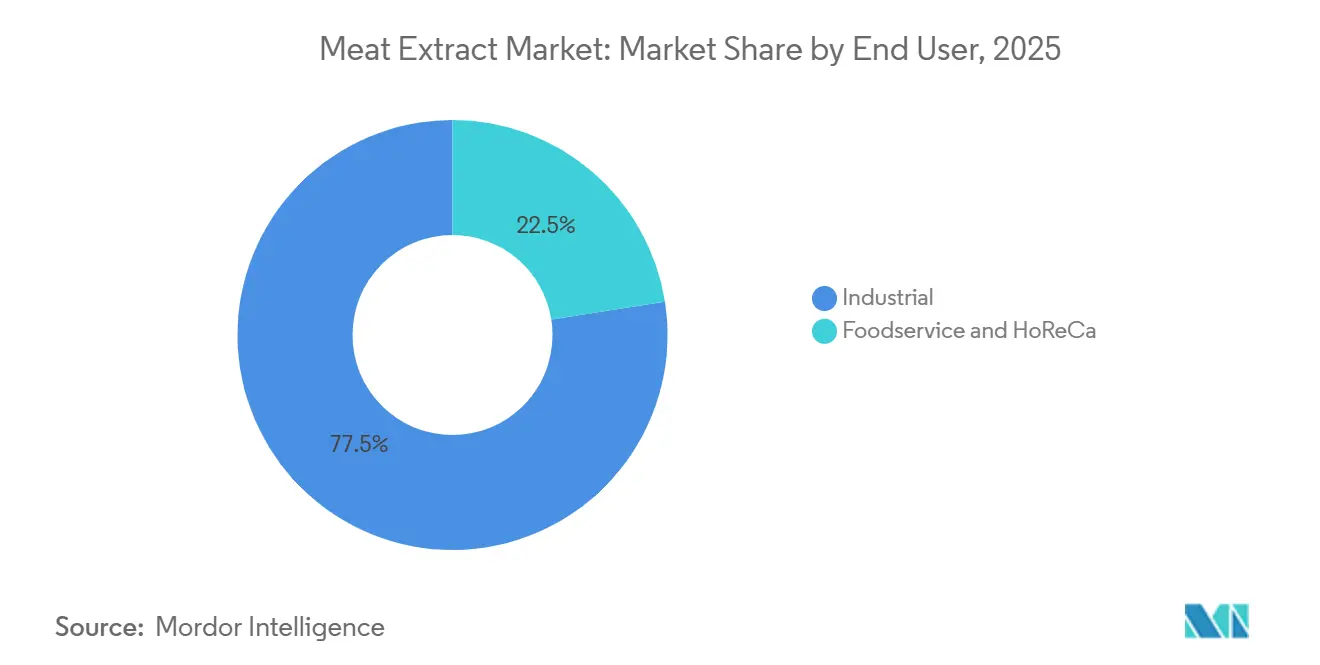
- By end user, industrial users held 77.47% of revenue in 2025, while foodservice and HoReCa are forecast to grow at a 9.61% CAGR through 2031.
- By geography, Asia-Pacific held 38.11% of revenue in 2025, while the Middle East and Africa is forecast to grow at a 9.14% CAGR through 2031.
Note: Market size and forecast figures in this report are generated using 黑料不打烊’s proprietary estimation framework, updated with the latest available data and insights as of January 2026.
Market Trends and Insights
Drivers Impact Analysis of Meat Extract Market*
| Driver | (~) % Impact on CAGR Forecast | Geographic Relevance | Impact Timeline |
|---|---|---|---|
| Rising Demand for Protein-Rich Convenience Foods | +2.5% | Global, concentrated in North America, Asia-Pacific, and Europe | Short term (≤ 2 years) |
| Growth in Savory Flavor Applications in Soups and Sauces | +1.8% | Asia-Pacific core, North America, with expansion into the Middle East and Africa | Short term (≤ 2 years) |
| Clean-Label and Natural Ingredient Preference | +1.4% | North America and Europe, expanding into premium Asia-Pacific segments | Medium term (2-4 years) |
| Expansion of Pet Food and Animal Nutrition Uses | +1% | North America and Europe, with Asia-Pacific emerging rapidly | Medium term (2-4 years) |
| Adoption in Biopharma and Cell-Culture Media | +0.7% | North America, Europe, Japan, and South Korea | Long term (≥ 4 years) |
| Sustainability-Driven Valorization of Meat Co-Products | +0.5% | Europe primarily, with global regulatory spillover | Long term (≥ 4 years) |
| Source: 黑料不打烊 | |||
Rising Demand for Protein-Rich Convenience Foods
The meat extract market gains support when food manufacturers adjust products to meet demand for protein-rich diets and convenient meals across packaged food, foodservice, and health nutrition channels. The 2025 IFIC Food and Health Survey identified high-protein eating as the most prevalent reported dietary pattern in the United States. Mindful eating was reported by 23% of survey respondents, reinforcing the importance of clear ingredient lists, nutrition information, and recognizable sources of flavor and protein. Time-pressed consumers across demographics are choosing ready-to-heat meals fortified with concentrated protein derived from beef, pork, poultry, and fish extracts. Uniform labelling dates set by the USDA FSIS provide clarity for reformulations, encouraging manufacturers to launch new protein-dense SKUs [1]. Enzymatic hydrolysis has boosted amino acid recovery without compromising taste, letting brands balance nutrition and flavor.
Growth in Savory Flavor Applications in Soups and Sauces
The meat extract market relies heavily on soup, broth, sauce, and seasoning applications because these products require a consistent savory profile across large production runs and multiple regional recipes. Campbell reported 15% year-over-year sales growth in its Meals and Beverages segment during fiscal 2025, including gains in broth and condensed soup categories, according to sec.gov [2]. This end-use demand supports procurement of broth ingredients and concentrated flavor bases that can be standardized across branded products. Symrise announced chicken powder capabilities from its Berric site in France, with a new spray-drying tower scheduled to operate from mid-2026. The investment serves European, African, and Middle Eastern customers and provides additional supply coverage for Asia-Pacific and Latin American customers. Traceability requirements for animal-derived ingredients increase the value of suppliers that can document species origin, raw material controls, batch consistency, and food safety controls.
Clean-Label and Natural Ingredient Preference
The meat extract market benefits as clean-label requirements move from a premium feature toward a common retail expectation in North America and Europe. Campbell stated in 2025 that its chicken is sourced from United States Department of Agriculture-approved suppliers and that it does not use bioengineered meat. Such statements show why food brands place greater weight on ingredient provenance, supplier documentation, and the ability to explain sourcing choices to customers. Verified meat concentrates can compete for formulations that might otherwise use MSG or synthetic flavor enhancers, particularly in products where natural positioning is part of the brand promise. Suppliers also need food safety systems and country-specific certifications to support these formulations across export markets and customer audits. Those requirements can raise compliance costs for smaller processors while supporting established suppliers with recognized credentials, technical support, traceable ingredients, and regulatory documentation.
Expansion of Pet Food and Animal Nutrition Uses
The meat extract market has an additional demand path through pet nutrition, animal feed applications, and biological materials. Extract manufacturers may use similar extraction capabilities to serve food-grade and specialty nutrition customers when their certifications and product specifications allow it. This can improve plant utilization because a facility may support human food lines, premium animal nutrition contracts, and specialized biological products using closely related raw material handling systems. The opportunity extends to cell-culture media because animal-derived by-products can contain proteins, amino acids, and lipids suitable for serum-free formulations. The meat extract market can benefit when suppliers validate these materials for food, nutrition, or life science uses without compromising application-specific standards, required documentation, or customer quality expectations.
Restraints Impact Analysis of Meat Extract Market*
| Restraint | (~) % Impact on CAGR Forecast | Geographic Relevance | Impact Timeline |
|---|---|---|---|
| Intensifying Plant-Based Alternatives Competition | -1.5% | North America and Europe, with limited impact in Asia-Pacific and the Middle East and Africa | Short term (≤ 2 years) |
| Volatility in Livestock Raw-Material Costs | -1.1% | Global, most severe in North America, Brazil, and Australia | Medium term (2-4 years) |
| Stricter Carbon-Footprint Labeling Regulations | -0.7% | Europe primarily, with spillover to the United Kingdom, Canada, and Australia | Long term (≥ 4 years) |
| Technological Advances in Non-Meat Umami Substitutes | -0.5% | North America and Europe, with growth in premium Asia-Pacific segments | Long term (≥ 4 years) |
| Source: 黑料不打烊 | |||
Intensifying Plant-Based Alternatives Competition
The meat extract market faces its clearest substitution risk in fermented and plant-based umami ingredients rather than in finished plant-based meat products alone. Ajinomoto Health and Nutrition North America launched its Palate Perfect FL-TM fermented tomato flavor in June 2025 as a natural flavor solution for food formulations. These alternatives compete for use in soups, sauces, and snack coatings where savory performance, consistent supply, and label flexibility matter. Fermentation-derived ingredients can be attractive where manufacturers seek natural flavor claims without animal-based labeling, especially when reformulating established products. Price-sensitive, high-volume applications are more exposed when flavor performance is considered comparable, and the product has limited need for an animal-derived protein claim. Meat extract suppliers respond by emphasizing species origin, protein contribution, sensory depth, traceable sourcing, and customer-specific formulation support.
Volatility in Livestock Raw-Material Costs
Livestock inputs remain a major variable cost for extract producers because cuts, bones, offal, and rendering co-products can move sharply in price. Drought, animal disease events, and energy costs can affect raw material availability, processing costs, spray-drying operations, and conversion margins at the same time. Manufacturers may hold higher inventories to maintain supply continuity during disruption and to avoid failing customer production schedules. This can increase working-capital needs and delay product development, capacity investment, or other commercial commitments. Multi-species portfolios can provide some flexibility when the cost of one animal input rises, or supply is disrupted in a specific species. The meat extract market also faces longer-term pressure from carbon-footprint disclosure rules, which can add supply-chain reporting costs and place a heavier burden on smaller processors with limited compliance resources.
*Our forecasts treat driver/restraint impacts as directional, not additive. The impact forecasts reflect baseline growth, mix effects, and variable interactions.
Meat Extract Market Segment Analysis
By Source, Beef Holds the Leading Position While Fish Leads Growth
Beef held 35.55% of the meat extract market size by revenue in 2025. It is used in bouillon production, instant noodle seasonings, soups, gravies, snack seasonings, and HoReCa stock bases, where its glutamate and peptide profile helps large food processors deliver repeatable savory flavor across batches. Beef has broad acceptance in applications that require a familiar meat profile, while pork plays a complementary role in Chinese processed meat and Central European sausage manufacturing. Chicken supports kitchen stocks, institutional catering, and ready meal recipes across a broad global application base. Turkey can serve North American health-oriented reformulation needs as a lower-fat protein base, while veal and lamb remain specialized ingredients for premium culinary uses in Europe.
Fish is projected to expand at a 9.01% CAGR from 2026 to 2031, the fastest rate among source categories. Demand is linked to aquaculture-intensive markets in Southeast Asia, functional nutrition products, and cell-culture media applications. Fish extract has a dual role because it can act as a culinary umami base in Asian foods and a marine bioactive ingredient for specialized nutrition or life science uses, giving suppliers access to food and nonfood demand pools. Species-origin and allergen labeling remain important for companies selling fish-derived ingredients across national borders, so traceable raw material systems and clear product documentation help suppliers meet buyer needs in higher-specification markets. Capacity decisions must consider regional sourcing, cold-chain management, aquaculture supply patterns, and the requirements of each end use.

By Form, Powder Leads Scale While Liquid Concentrate Gains Foodservice Demand
Powder held 46.09% of revenue in the meat extract market in 2025. Its position is supported by shelf stability, lower freight weight than liquid formats, and accurate dosing in automated manufacturing lines. Powder fits high-volume industrial uses in soups, sauces, seasonings, dry mixes, and other processed food products where storage efficiency and batch control are important. Paste remains a smaller format for artisanal and specialist foodservice users because its thicker texture can help immediate incorporation into sauces and marinades. Granules and spray-dried formats with carrier agents serve applications that need controlled dissolution under specific humidity, mixing, or throughput conditions.
Liquid concentrate is forecast to grow at a 9.23% CAGR from 2026 to 2031. Commercial kitchens can use the format to reduce dissolution steps and improve portion control because the product dissolves quickly without pre-heating or extensive agitation. This matters in high-throughput restaurants and institutional kitchens where labor costs are a concern. Liquid products require stronger cold-chain and handling controls because they have higher moisture content, which can favor suppliers with established food safety systems. The meat extract market has room for liquid formats tailored to foodservice pack sizes and kitchen processes, and the category may favor larger suppliers that can support certified production and reliable distribution.
By End User:
Industrial Scale Meets Foodservice GrowthIndustrial users held 77.47% of revenue in 2025, giving them the largest meat extract market size among end-user groups. Their demand spans soups and bouillons, sauces and dressings, ready meals, instant noodles, snacks, seasonings, dietary supplements, baby food, pet food, and biotechnology media. This range reduces reliance on any single processed food category because volume pressure in one application can be partly offset by demand from another. Industrial customers value consistent specifications, large-scale supply reliability, and ingredients that integrate with automated production systems. The breadth of applications creates a stable demand base and supports differentiated grades based on flavor intensity, protein profile, and technical function.
Foodservice and HoReCa is forecast to grow at a 9.61% CAGR from 2026 to 2031. Growth is associated with restaurant menu upgrades, institutional catering requirements, and the expansion of quick-service restaurant chains in emerging markets. Foodservice buyers favor products that shorten preparation time and support consistent taste, and ready-to-use liquid concentrates can meet this need by simplifying broth and sauce preparation. Ajinomoto Co., Inc. offers KALDOPLUS liquid chicken broth concentrate in a 1-liter format for HoReCa use. Suppliers can serve industrial users and foodservice customers from the same site when packaging and concentration levels are adjusted, improving throughput without requiring an entirely separate manufacturing base.
Geography Analysis
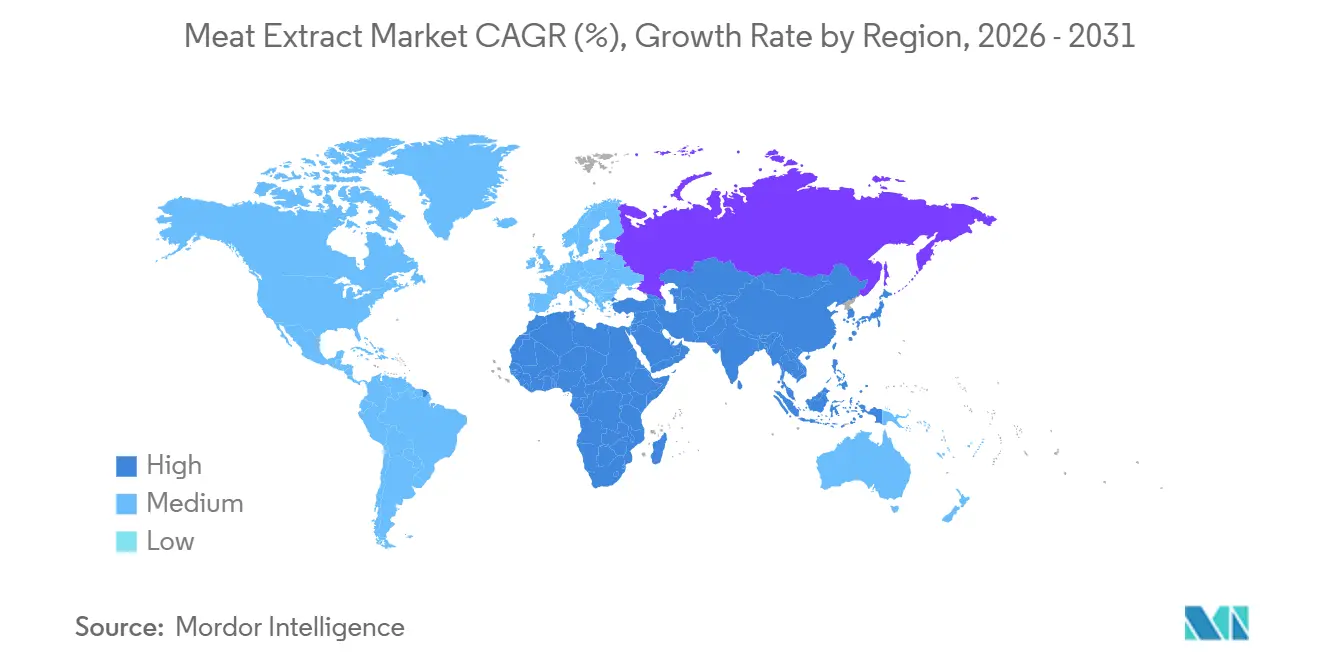
Asia-Pacific held 38.11% of revenue in 2025, the largest regional revenue share. China, Japan, South Korea, Thailand, and Indonesia have a large base of instant noodle, bouillon, and ready-meal manufacturers that create strong demand for savory flavor systems. China is especially important because of its substantial processing base for instant noodles and savory snacks, while Japan and South Korea serve as centers for premium flavor development. Ajinomoto Philippines announced a PHP 9.1 billion factory investment in Central Luzon in August 2025, with construction planned for May 2026 and operations planned for April 2028; the site is intended to produce flavored seasonings and cooking sauces.
North America and Europe form mature manufacturing areas for the meat extract market. In North America, high-protein diets and clean-label reformulation support demand for traceable ingredients [3]. European suppliers face more extensive documentation requirements for animal-derived food ingredients, which can favor larger companies with established compliance and quality systems. South America has an important livestock base in Brazil and Argentina that supports the availability of animal raw materials for food ingredient processing.
The Middle East and Africa is forecast to grow at a 9.14% CAGR from 2026 to 2031. Urbanization, population growth, and halal-certified processed food production support the regional outlook. Saudi Arabian food requirements emphasize food safety and ingredient compliance, while food safety rules in the United Arab Emirates also support traceability expectations for imported and locally supplied ingredients. Nigeria and Egypt are emerging demand centers as modern retail and cold-chain capacity develop. Morocco and South Africa provide additional food processing bases with more established regulatory systems.
Competitive Landscape
The meat extract market includes Givaudan SA, Kerry Group plc, Symrise, and Ajinomoto Co., Inc., which set important standards for technical service, scale, and regulatory compliance, while regional processors and suppliers focused on specific animal proteins or biological extracts compete in narrower areas. Kerry Group plc launched Smart Taste in September 2025 as a platform combining dairy, fire-cooking, salt reduction, masking, cocoa, and citrus capabilities. This type of platform lets customers manage several taste and reformulation needs through one supplier and can raise switching costs where a supplier supports multiple parts of a product recipe. The meat extract market remains open to specialized competitors that can offer application-specific products and responsive service.
Competitive strength also depends on certifications and quality systems. ISO 9001, GMP, halal certification, and regional food safety approvals are important for suppliers serving multinational food companies, and these requirements can create barriers for entrants that lack documented processes or established audit histories, while also supporting pricing discipline when customers need a reliable approved supplier base. Symrise expanded chicken powder capabilities at its Berric facility in France, with the new spray-drying tower scheduled to operate from mid-2026. The investment adds supply coverage for customers across Europe, Africa, the Middle East, Asia-Pacific, and Latin America.
Potential opportunities also exist where food-grade animal materials can serve life science applications, and research published in 2025 found that food-grade bovine organ by-products had profiles suitable for some serum-free cell-culture media formulations. Suppliers that validate materials for multiple end uses may gain access to higher-value customer groups, although each application requires distinct product specifications and careful compliance controls. Givaudan SA commissioned a 24,000-square-meter production facility in Cikarang, Indonesia, in June 2026 for savory, sweet, and snack flavor powders. The facility started with 60 positions and has scope for further expansion, reinforcing the importance of local production capacity in Southeast Asian flavor markets.
Meat Extract Industry Leaders
-
Givaudan SA
-
Essentia Protein Solutions
-
International Dehydrated Foods
-
Kerry Group plc
-
dsm-firmenich
- *Disclaimer: Major Players sorted in no particular order
Meat Extract Market Companies Covered in this Report
- Givaudan SA
- Kerry Group plc
- Essentia Protein Solutions
- dsm-firmenich
- International Dehydrated Foods (IDF)
- Symrise AG
- Ajinomoto Co., Inc.
- Proliant Biologicals
- Campbell Soup Company
- Basic Food Flavours Inc.
- Titan Biotech Ltd.
- Maverick Biosciences
- Haco AG
- Bio Basic Asia Pacific Pte Ltd
- Thermo Fisher Scientific
- Vickers Laboratories Limited
- Costantino & C. spa.
- Henan Alfa Chemical Co., Ltd
- Spectrum Chemical
- Neogen Corporation
Recent Industry Developments in Meat Extract Market
- June 2026: Givaudan SA commissioned a 24,000 sq meter production facility in Cikarang, Indonesia, producing savory, sweet, and snack flavor powders for Southeast Asian markets with approximately 60 initial positions and potential for further site expansion
- October 2025: Symrise announced chicken powder production at its Berric, France, site, with a new spray-drying tower operational from mid-2026, targeting European, African, and Middle Eastern markets and providing dual-sourcing redundancy for Asia-Pacific and Latin American customers alongside its US production.
- September 2025: Kerry Group plc launched Smart Taste?, a proprietary taste platform integrating dairy, fire-cooking, Tastesense? salt reduction, masking, cocoa, and citrus capabilities, enabling food manufacturers to address reformulation and regulatory compliance challenges without compromising sensory performance.
Global Meat Extract Market Report Scope
The Meat Extract Market Report is Segmented by Source (Beef, Pork, Chicken, Fish, Turkey, and More), Form (Powder, Paste, and More), End User (Foodservice and HoReCa, Industrial), and Geography (North America, Europe, Asia-Pacific, South America, Middle East and Africa). The Market Forecasts are Provided in Terms of Value (USD).
Segmentation Overview
| Beef |
| Pork |
| Chicken |
| Fish |
| Turkey |
| Other Sources |
| Powder |
| Paste |
| Liquid Concentrate |
| Other Forms |
| Foodservice and HoReCa | |
| Industrial | Soups and Bouillons |
| Sauces and Dressings | |
| Ready Meals and Instant Noodles | |
| Snacks and Seasonings | |
| Nutraceuticals & Dietary Supplements | |
| Baby Food | |
| Pet Food | |
| Biotechnology & Culture Media | |
| Other Industries |
| North America | United States |
| Canada | |
| Mexico | |
| Rest of North America | |
| Europe | Germany |
| United Kingdom | |
| Italy | |
| France | |
| Spain | |
| Netherlands | |
| Poland | |
| Belgium | |
| Sweden | |
| Rest of Europe | |
| Asia-Pacific | China |
| India | |
| Japan | |
| Australia | |
| Indonesia | |
| South Korea | |
| Thailand | |
| Singapore | |
| Rest of Asia-Pacific | |
| South America | Brazil |
| Argentina | |
| Colombia | |
| Chile | |
| Peru | |
| Rest of South America | |
| Middle East and Africa | South Africa |
| Saudi Arabia | |
| United Arab Emirates | |
| Nigeria | |
| Egypt | |
| Morocco | |
| Turkey | |
| Rest of Middle East and Africa |
| By Source | Beef | |
| Pork | ||
| Chicken | ||
| Fish | ||
| Turkey | ||
| Other Sources | ||
| By Form | Powder | |
| Paste | ||
| Liquid Concentrate | ||
| Other Forms | ||
| By End User | Foodservice and HoReCa | |
| Industrial | Soups and Bouillons | |
| Sauces and Dressings | ||
| Ready Meals and Instant Noodles | ||
| Snacks and Seasonings | ||
| Nutraceuticals & Dietary Supplements | ||
| Baby Food | ||
| Pet Food | ||
| Biotechnology & Culture Media | ||
| Other Industries | ||
| By Region | North America | United States |
| Canada | ||
| Mexico | ||
| Rest of North America | ||
| Europe | Germany | |
| United Kingdom | ||
| Italy | ||
| France | ||
| Spain | ||
| Netherlands | ||
| Poland | ||
| Belgium | ||
| Sweden | ||
| Rest of Europe | ||
| Asia-Pacific | China | |
| India | ||
| Japan | ||
| Australia | ||
| Indonesia | ||
| South Korea | ||
| Thailand | ||
| Singapore | ||
| Rest of Asia-Pacific | ||
| South America | Brazil | |
| Argentina | ||
| Colombia | ||
| Chile | ||
| Peru | ||
| Rest of South America | ||
| Middle East and Africa | South Africa | |
| Saudi Arabia | ||
| United Arab Emirates | ||
| Nigeria | ||
| Egypt | ||
| Morocco | ||
| Turkey | ||
| Rest of Middle East and Africa | ||
Key Questions Answered in the Report
What is the projected size of the meat extract market by 2031?
The meat extract market is projected to reach USD 7.72 billion by 2031, from USD 4.74 billion in 2025, at an 8.49% CAGR, supported by food and foodservice applications.
Which source segment leads revenue?
Beef leads with 35.55% revenue share in 2025, supported by use in bouillon, soups, gravies, snack seasonings, ready meals, and commercial stock bases, which makes it central to the meat extract market.
Which format is growing fastest?
Liquid concentrate is projected to grow at a 9.23% CAGR through 2031.
Which region has the largest revenue base?
Asia-Pacific leads with 38.11% of revenue in 2025 because it has a deep base of instant noodle, bouillon, ready-meal, and savory snack manufacturers.